
Belgian ale is a family of related styles more than a single beer. The 47 Belgian ales on this ranking break down as 15 Belgian Tripel (32% — the strongest single sub-style, and the one most international drinkers associate with the country), 8 Belgian Dubbel, 8 Belgian Ale, 5 Blonde, 5 Pale, plus a smaller cluster of Belgian Strong Ale, Strong Dark, Golden Strong, and Quadrupel entries. That sub-style breadth is the point: no other national brewing tradition builds so many distinct top-fermented dark-and-strong styles under one flag and takes each one seriously at competition level.
Currently leading the ranking: Duvel (Duvel Moortgat), Tripel LeFort (Brouwerij Omer Vander Ghinste) and OMER. Traditional Blond.
How this ranking works
The hopIQ Score judges every beer against its style first: it rewards medals from competitions that judge within style categories and deducts points where a beer measurably deviates from its style reference. Community ratings add to that. Non-alcoholic excluded. No paid placement — order follows the data alone. Ranking spans 237 beers from 43 breweries.
Top 5 of 50
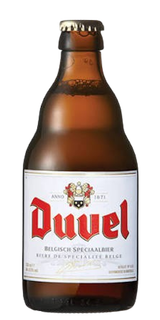
ABV
8.5%
Bitterness
Noticeably bitter
Colour
pale gold 4
A subtle bitterness runs through this golden Belgian classic, which takes about 90 days to make: first fermentation at 20 to 26 °C, cold maturation near –2 °C, then refermentation in the bottle and six weeks in the cold cellar. Its…A subtle bitterness runs through this golden Belgian classic, which takes about 90 days to make: first fermentation at 20 to 26 °C, cold maturation near –2 °C, then refermentation in the bottle and six weeks in the cold cellar. Its Scottish yeast, gathered in the years after the First World War, is still in use. The beer got its name when a shoemaker called it "een echte Duvel", a real devil, and it launched in 1923 with just a few crates.
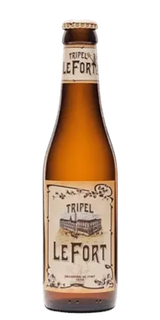
Tripel LeFort#50 worldwide
ABV
8.8%
Bitterness
Lightly bitter
Colour
golden 5
Banana and red apple meet vanilla and clove, with hints of citrus, lime and rose in a fruity, complex aroma; the taste is full and the finish soft, with a warmth from the alcohol that fades slowly. This hazy golden tripel (8.8 %) is…Banana and red apple meet vanilla and clove, with hints of citrus, lime and rose in a fruity, complex aroma; the taste is full and the finish soft, with a warmth from the alcohol that fades slowly. This hazy golden tripel (8.8 %) is top-fermented and named after Brasserie LeFort, which Felix Verscheure founded in Kortrijk in 1854; his granddaughter Marguerite married Omer Vander Ghinste.
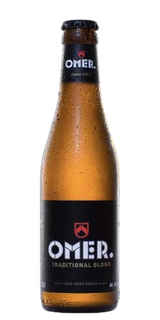
OMER. Traditional Blond#121 worldwide
ABV
8.0%
Bitterness
Noticeably bitter
Colour
amber 10
Fruity and citrusy on the nose, full on the palate, with a subtle bitterness in the finish: this golden blond beer (8.0 %) is top-fermented and refermented in the bottle. It is brewed with malted barley from France's Loire region and three…Fruity and citrusy on the nose, full on the palate, with a subtle bitterness in the finish: this golden blond beer (8.0 %) is top-fermented and refermented in the bottle. It is brewed with malted barley from France's Loire region and three aromatic hop varieties. The name goes back to founder Omer Vander Ghinste, who put his own name on his beers; in the family every firstborn son has been christened Omer ever since.
Which of these beers fits your taste?
Build your Beer DNA and see which of these top beers fit your taste — free, in two minutes.
Build my Beer DNA4
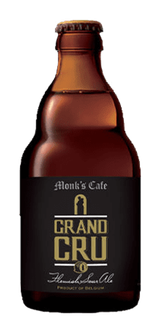
Monk's Café Grand Cru#160 worldwide
ABV
5.5%
Bitterness
Very bitter
Colour
deep amber 15
A top-fermented old brown from Flanders, tank-aged and lean where you'd expect richness. The nose leads with caramel and dark balsamic vinegar, undercut by the vinous warmth of raisins. On the palate the tension between sweet and sour…A top-fermented old brown from Flanders, tank-aged and lean where you'd expect richness. The nose leads with caramel and dark balsamic vinegar, undercut by the vinous warmth of raisins. On the palate the tension between sweet and sour holds firm: enough acidity to keep the body from settling, enough malt backbone to stop it turning austere. Fresh and mildly tart throughout, with a clean finish. The carbonation stays restrained, letting the flavours breathe. A beer for the late evening.
5
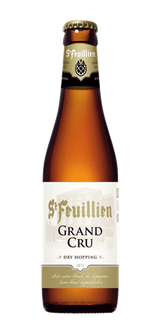
St-Feuillien Grand Cru#231 worldwide
ABV
9.5%
Bitterness
Lightly bitter
Colour
amber 10
Created in 2011 as the house's extra-pale tasting beer, refermented in the bottle and brewed without any spice. Styrian Golding hop flowers go in as a dry hop, and a champagne yeast shapes the fermentation. It pours a very pale, brilliant…Created in 2011 as the house's extra-pale tasting beer, refermented in the bottle and brewed without any spice. Styrian Golding hop flowers go in as a dry hop, and a champagne yeast shapes the fermentation. It pours a very pale, brilliant blond under a fine, airy head that leaves lace on the glass. The first sip is light, then a long, nuanced bitterness builds, and noble hops dominate the finish. Flavours of pear, white grape, lemon zest, fresh hay, honeyed malt and white pepper.
Ranks 6–10
6
Ename Blond#328 worldwide
Ename Blond belongs to the abbey beer range the brewery built around the former Benedictine abbey of Ename, founded in 1063 and destroyed during the French Revolution. Added to the range in 1997, it is refermented in the bottle. The nose…Ename Blond belongs to the abbey beer range the brewery built around the former Benedictine abbey of Ename, founded in 1063 and destroyed during the French Revolution. Added to the range in 1997, it is refermented in the bottle. The nose is fruity, with orange and banana over sweet malt. On the palate citrus, malt and a firm hop note keep each other in check, with a faint mineral touch, before a long, dry and slightly bitter finish.
7
Grimbergen Double Ambrée#431 worldwide
The first Grimbergen beer, launched in 1958, and still the dubbel of the range. Dark caramel malt gives the deep mahogany colour, with toasted barley malt adding sweetness. The nose is rich in toffee, macerated fruit, roast, liquorice and…The first Grimbergen beer, launched in 1958, and still the dubbel of the range. Dark caramel malt gives the deep mahogany colour, with toasted barley malt adding sweetness. The nose is rich in toffee, macerated fruit, roast, liquorice and prune. On the palate caramel and ripe fruit lead, backed by a clear hop bitterness and a fine carbonation. The finish lingers on roasted grain, liquorice and prune, with bitterness and sweetness building together.
8
Hopus#485 worldwide
Hopus began as a secret batch brewed for the wedding of Paul Lefebvre. For its fifteenth anniversary in 2023, the brewers reworked the recipe of this bottle-refermented Belgian beer into a strong blonde with a delicate bitterness. It comes…Hopus began as a secret batch brewed for the wedding of Paul Lefebvre. For its fifteenth anniversary in 2023, the brewers reworked the recipe of this bottle-refermented Belgian beer into a strong blonde with a delicate bitterness. It comes in at 8.3 % ABV and 40 IBU from the Lefebvre family brewery in Quenast.
9
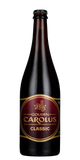
Gouden Carolus Classic#493 worldwide
Caramel and bitter chocolate from a blend of dark and roasted malts, with a roasted, fruity depth behind them: that is the Classic, a ruby-dark, top-fermented ale at 8.5%. A Mechelen chronicle calls this 'Groot Keizersbier' the drink that…Caramel and bitter chocolate from a blend of dark and roasted malts, with a roasted, fruity depth behind them: that is the Classic, a ruby-dark, top-fermented ale at 8.5%. A Mechelen chronicle calls this 'Groot Keizersbier' the drink that set riders and horses galloping on the fox hunt, and its name nods to the gold coins of Emperor Charles. Brewed with Belgian hops, lagered for three weeks.
10

Bière de Miel#521 worldwide
Bière de Miel revives a speciality of the Rimaux-Deridder farm-brewery, which won prizes at regional agricultural fairs around 1880. It disappeared after the Dupont family took over and returned in 1997 as an organic beer, under a faithful…Bière de Miel revives a speciality of the Rimaux-Deridder farm-brewery, which won prizes at regional agricultural fairs around 1880. It disappeared after the Dupont family took over and returned in 1997 as an organic beer, under a faithful copy of the original label. The honey ferments out fully in the bottle, so the beer is not sweet. Chestnut honey leads the nose with orange and mimosa-like flowers, and hazelnut joins on a broad, dry palate.






The taste landscape
Of the 50 top beers, 25 lean malt-forward and 21 lean hop-forward.