German strong beer is Bavarian Doppelbock. Of the 32 German strong beers on this ranking, 22 are Doppelbock (69% — massively dominant), 3 are Bock, 2 Barleywine, plus single entries in Eisbock, Weizenbock (Schneider Aventinus territory), Strong Ale, Scotch Ale, and Spiced Beer. The Doppelbock concentration is the story: the style originates in the Bavarian monastic brewing tradition (Paulaner's Salvator, first brewed by Paulaner monks in Munich as a strong Lenten beer, is generally credited as the founding Doppelbock and gives the "-ator" suffix now used across the sub-style), and every serious Bavarian monastic or ex-monastic brewery still produces a Doppelbock in the same lineage.
Currently leading the ranking: Schneider Weisse TAP6 Aventinus (G. Schneider & Sohn), Weihenstephaner Vitus (Bayerische Staatsbrauerei Weihenstephan) and Schneider Weisse TAP9 Aventinus Eisbock. G. Schneider & Sohn places 3 of the top 10.
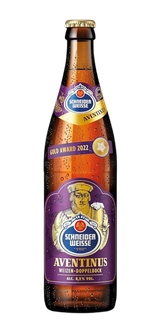
First brewed in 1907 under Mathilde Schneider, Aventinus is the brewery's wheat doppelbock: a dark ruby, bottle-conditioned wheat bock of equal parts wheat and barley malt, brewed from 18.5 °Plato, open-fermented and hopped with…First brewed in 1907 under Mathilde Schneider, Aventinus is the brewery's wheat doppelbock: a dark ruby, bottle-conditioned wheat bock of equal parts wheat and barley malt, brewed from 18.5 °Plato, open-fermented and hopped with Hallertauer Herkules. Ripe banana, raisin and plum lead the nose, joined by clove, a touch of liquorice and roasted malt. The palate is full and warming, with caramel and dark bread under a soft sweetness, restrained bitterness and a smooth finish.
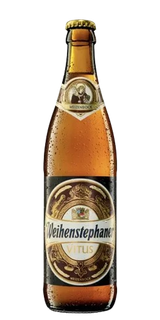
Vitus is a pale Weizenbock brewed to 16.5 °P and given an extra-long maturation. It shines bright gold under a creamy head, with fine yeast in suspension. The nose brings dried apricot and citrus, and the palate adds clearly defined clove…Vitus is a pale Weizenbock brewed to 16.5 °P and given an extra-long maturation. It shines bright gold under a creamy head, with fine yeast in suspension. The nose brings dried apricot and citrus, and the palate adds clearly defined clove and a hint of banana. Full-bodied and effervescent, it drinks less like a heavy strong beer and more like a rich, fruit-forward wheat beer, with the 7.7 % ABV well integrated.
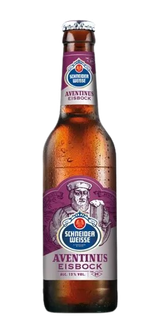
Made since 2002, Aventinus Eisbock concentrates Aventinus by freezing it and drawing off part of the water as ice, an idea the brewery traces to a consignment that froze in transit in the 1930s. It is brewed from 25.5 °Plato, hopped with…Made since 2002, Aventinus Eisbock concentrates Aventinus by freezing it and drawing off part of the water as ice, an idea the brewery traces to a consignment that froze in transit in the 1930s. It is brewed from 25.5 °Plato, hopped with Hallertauer Herkules and open-fermented, with no bottle conditioning because of the ice process. Mahogany to almost black, it shows spicy plum, banana and clove with hints of bitter almond and marzipan. Dried fruit and dark caramel fill a soft yet dense body before a warming finish.
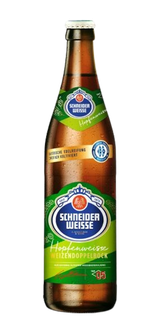
Created in 2007 as a transatlantic collaboration with a New York brewer and part of the range since 2008, Hopfenweisse is a strong, bottle-conditioned wheat bock brewed from 18.5 °Plato. Hallertauer Tradition and Saphir go in during the…Created in 2007 as a transatlantic collaboration with a New York brewer and part of the range since 2008, Hopfenweisse is a strong, bottle-conditioned wheat bock brewed from 18.5 °Plato. Hallertauer Tradition and Saphir go in during the boil and again as a dry hop. The nose is intensely floral with tropical fruit such as mango, papaya and pineapple, plus apricot and ripe banana. Biscuity malt sweetness and tangerine carry the palate before a firm bitterness and a warming finish.
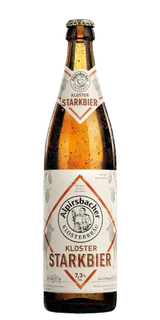
The strong beer of the Kloster range, which the brewery links to the monks' old custom of drinking 'liquid bread' during Lent. It is brewed from an especially high original gravity and lagered for a long time before release. Golden in the…The strong beer of the Kloster range, which the brewery links to the monks' old custom of drinking 'liquid bread' during Lent. It is brewed from an especially high original gravity and lagered for a long time before release. Golden in the glass, it has what the brewery calls a rustic, powerful undertone and a substantial finish. Tasters describe caramel and honey sweetness over bready malt, grassy and resinous hop spice, a full, creamy body and a firmly bitter close.
Asam Bock is a dark Doppelbock named after the Baroque painter and architect Cosmas Damian Asam. At 18.2 °P and 7.3 % ABV it is the strongest beer of the house. Dark barley, caramel and colouring malts produce an intense, sweet aroma with…Asam Bock is a dark Doppelbock named after the Baroque painter and architect Cosmas Damian Asam. At 18.2 °P and 7.3 % ABV it is the strongest beer of the house. Dark barley, caramel and colouring malts produce an intense, sweet aroma with light roast that hints at coffee. The first sip is creamy and sweet, the body full, and a fine bitterness from Perle hops follows before a long, aromatic finish.
A light sherry note meets roasted aromas in a malty, weighty beer with strength held in check. The finish is spicy, with a caramel note. Brewed at 16 % original gravity and 7.2 % ABV. The dark bock won Bronze at the World Beer Cup in 2016…A light sherry note meets roasted aromas in a malty, weighty beer with strength held in check. The finish is spicy, with a caramel note. Brewed at 16 % original gravity and 7.2 % ABV. The dark bock won Bronze at the World Beer Cup in 2016 and European Beer Star Bronze the same year, then Gold in 2023.
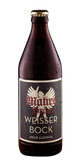
Mahrs Weisser Bock is a top-fermented wheat bock, available by tradition from Ash Wednesday for the Lenten season. It pours dark brown with a reddish tinge and a gentle haze under a sturdy, cream-coloured head. The nose combines layered…Mahrs Weisser Bock is a top-fermented wheat bock, available by tradition from Ash Wednesday for the Lenten season. It pours dark brown with a reddish tinge and a gentle haze under a sturdy, cream-coloured head. The nose combines layered fruitiness, soft yeast and a distinct malt fragrance, with the ripe banana and light clove typical of wheat yeast. On the palate it is softly malty and fresh, with a lively prickle and a hint of sweetness, before a mildly bitter, velvety finish. Strength is 7.2 percent from 16.8 °P wort.

A dark Doppelbock, chestnut brown under a fine-pored beige head. Caramel and malt notes combine with roasted nuts and are rounded off by slightly herbal hop aromas. The beer is full-bodied and warming on the palate, with a balanced…A dark Doppelbock, chestnut brown under a fine-pored beige head. Caramel and malt notes combine with roasted nuts and are rounded off by slightly herbal hop aromas. The beer is full-bodied and warming on the palate, with a balanced bitterness that keeps the sweetness in check; tasters also find light roast tones. The brewery places it in the Lenten strong-beer tradition. Bottom-fermented, with an original gravity of 18.5 °P.