Franziskaner
Franziskaner traces its roots to 1363, when a brewhouse beside the Franciscan monastery near the Munich Residenz was first recorded. The brewery moved to the Lilienberg in the Au district in 1841, came under Joseph Sedlmayr in 1861 and merged with Spaten in 1922. The monk on the label goes back to a design by Ludwig Hohlwein. Weissbier arrived in 1964 and has carried the Franziskaner name since 1974; the range centres on top-fermented wheat beers brewed in Munich, alongside a Helles and a Kellerbier. The company has belonged to AB InBev since 2005.
Beers by Franziskaner
8 beers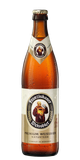
← scroll to see all 8 beers →
The recurring character behind the beers
Drawn from all 8 beers in the catalogue.
Four notes carry across the range. That's a tight house style — most breweries in the catalogue share just one.
A handful of styles across their range — a shared thread has to hold across each of them.
Franziskaner Hefe-Weissbier Naturtrüb
Their beers place in the Top 13% of the catalogue on average, across 3 ranked beers. Consistent rather than spiky — no single standout carrying the rest.
Similar Breweries
hopIQ exclusiveBased on style overlap and flavor profile
About Franziskaner
Franziskaner traces its roots to 1363, when a brewhouse beside the Franciscan monastery near the Munich Residenz was first recorded. The brewery moved to the Lilienberg in the Au district in 1841, came under Joseph Sedlmayr in 1861 and merged with Spaten in 1922. The monk on the label goes back to a design by Ludwig Hohlwein. Weissbier arrived in 1964 and has carried the Franziskaner name since 1974; the range centres on top-fermented wheat beers brewed in Munich, alongside a Helles and a Kellerbier. The company has belonged to AB InBev since 2005.
Other breweries from Germany