STYLE COMPARISON
Lager vs Ale — the two families of beer
This is the oldest division in beer, and it has nothing to do with colour, strength or country. It is about yeast — and about temperature.
Lager
Ale
Ale yeast works warm, near room temperature, and throws off esters and phenols as it goes: fruit, spice, sometimes banana or clove. Lager yeast works cold and slow, and leaves almost nothing behind — which is why lagers taste clean, and why the malt and hops have nowhere to hide. That is the whole mechanism. Everything else is style.
SIDE BY SIDE
3110 Lager against 9081 Ale
Every beer sits on the same four axes. The bar shows the actual spread of each style; the tick marks the median.
Ale spans from 4 to 100 IBU — the median says little, because it averages a mild bitter and a double IPA. Lager stays inside a third of that range.
The ale band covers almost the entire scale. Lager sits in a narrow, stable middle.
The clearest picture of the difference: ales run from very light to very full, lagers occupy the lower half almost entirely.
Lager sits high and consistently so — the cold fermentation and long conditioning show here. Ales are spread across the range.
FLAVOUR
What each tastes of
Share of beers in each style carrying the note.
Only in Lager
No distinctively separating notes.
Only in Ale
The sharpest divide sits in clean: 96% of Lager but only 47% of Ale.
WHEN TO CHOOSE WHICH
Which one is for you right now
Reach for a Lager when
- You want the ingredients, not the yeast, to speak
- Clean and crisp is the point
- You are drinking for refreshment
- Nothing should surprise you
Reach for an Ale when
- You want fruit, spice or funk in the glass
- Variety matters more than consistency
- You are exploring rather than refuelling
- The beer should have an opinion
The short version: lager yeast gets out of the way, ale yeast joins in. That single difference explains why lagers cluster tightly — nearly every one is clean, crisp and malty — while ales scatter across the whole map. No flavour note reaches sixty percent among ales; three reach ninety among lagers. Ales are not better or worse. They are simply more varied, and the numbers say so plainly.
WHERE TO START
The highest-ranked of each

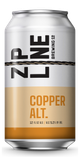
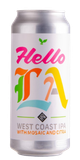
QUESTIONS
Common questions about this comparison
Is a Pilsner a lager?
Yes. So are Helles, Märzen, Bock, Dunkel and Schwarzbier. Lager is not a style, it is a whole branch — the largest one in this catalogue.
Is an IPA an ale?
Yes. So is a stout, a saison, a witbier and a barleywine. The ale side covers far more ground, which is why it is harder to describe in one sentence.
Does lager always mean light and yellow?
No. Schwarzbier, Dunkel and Doppelbock are all lagers, and all dark. The pale lager is simply the most exported one.
Which came first?
Ale, by thousands of years. Lager brewing needs cold storage, and it only became practical in Bavaria's cellars — and truly reliable once refrigeration arrived.
Find the style that matches your taste
Rate a few beers and hopIQ tells you which side is closer to your palate — and which to skip.