STYLE COMPARISON
IPA vs Pale Ale — which is right for you?
The IPA started as a Pale Ale that had been hopped harder. That is still the whole story, except the gap has widened: the median IPA in hopIQ sits at 60 IBU, the median Pale Ale at 35. Everything else follows from there.
IPA
Pale Ale
More hops means more of everything hops bring: citrus, pine, resin, tropical fruit. It also means more alcohol, because a bigger malt bill is needed to carry the bitterness — the IPA runs a fuller body and a drier finish. A Pale Ale keeps the malt audible. Every fourth Pale Ale in the catalogue carries a bready note; almost no IPA does.
SIDE BY SIDE
1722 IPA against 1492 Pale Ale
Every beer sits on the same four axes. The bar shows the actual spread of each style; the tick marks the median.
IPA sits well above Pale Ale; the ranges do not overlap, and IPA spans a wider range.
Pale Ale runs a step above IPA; the ranges overlap only partly.
IPA runs a step above Pale Ale; the ranges overlap only partly.
Pale Ale runs a step above IPA; the ranges overlap only partly.
FLAVOUR
What each tastes of
Share of beers in each style carrying the note.
Only in IPA
Only in Pale Ale
No distinctively separating notes.
The sharpest divide sits in malty: 72% of Pale Ale but only 29% of IPA.
WHEN TO CHOOSE WHICH
Which one is for you right now
Reach for an IPA when
- You want the hops out in front, not in support
- Citrus, pine and resin are the reason you opened it
- One good glass beats three easy ones
- You have found Pale Ales a bit polite
Reach for a Pale Ale when
- You want hop character without hop dominance
- The malt should still be part of the picture
- You are having more than one
- It is early, or the food is on the table
The short version: a Pale Ale balances hops against malt, an IPA lets the hops win. The IPA is also stronger, fuller and drier — the extra alcohol is what carries the extra bitterness. If a Pale Ale feels too restrained, the IPA is the step up. If an IPA wears you out by the second glass, the Pale Ale is where to go back to.
WHERE TO START
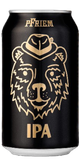
The highest-ranked of each

QUESTIONS
Common questions about this comparison
Where exactly does a Pale Ale end and an IPA begin?
There is no line, only a gradient. In practice, around 5.5 % and 45 IBU the balance tips: the hops stop supporting the malt and start leading it. Brewers put the label where they want it, which is why the two ranges overlap here.
Is a Session IPA a Pale Ale?
Practically, often yes. A Session IPA is an IPA brought down to Pale Ale strength, usually with the hop character kept high. The distinction is more about intent than taste.
Which should I start with?
Pale Ale. It shows what hops do without overwhelming everything else, and it makes the IPA easier to read afterwards.
Why do IPAs taste of grapefruit and pine?
American hop varieties — Cascade, Citra, Simcoe and their relatives — carry those compounds naturally. English hops do not, which is why an English IPA tastes earthy and herbal instead.
Find the style that matches your taste
Rate a few beers and hopIQ tells you which side is closer to your palate — and which to skip.