Tucher Privatbrauerei
Tucher traces its roots to 1672, when a municipal wheat brewery was established in Nuremberg. The aristocratic von Tucher family took ownership in 1855, bringing with them the Moor's head emblem from their family coat of arms — a symbol still used today. The brewery occupies an unusual position on the boundary between Nuremberg and Fürth, with two brewing kettles physically in each city. Today Tucher is owned by the Radeberger Gruppe, part of the Dr. Oetker Group. Its range centres on wheat beers and Franconian styles: Helles and Dunkles Hefeweizen, Nürnberger Rotbier, Kellerbier, and the Bajuvator Doppelbock.
Beers by Tucher Privatbrauerei
8 beers




← scroll to see all 8 beers →
The recurring character behind the beers
Tucher Privatbrauerei brew a broad range across 4 style families.
Across these 8 beers, 4 notes keep showing up:
Four notes carry across the range. That's a tight house style — most breweries in the catalogue share just one.
Compared with the wider catalogue of similar styles:
They stay close to the peer baseline on their recurring notes.
How we measure this
Two thresholds are at work here:
- The signature list shows notes that recur in at least 6% of this brewery's beers. A low bar — enough to flag a pattern, not high enough to call it an exclusive trait.
- The peer comparison below shows only notes where this brewery's coverage differs from similar breweries by at least 20 percentage points. A higher bar — enough to call a real difference, not a nudge.
A note can appear on the signature list without appearing in the peer comparison: it recurs here, but similar breweries do the same thing.
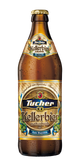
Tucher Kellerbier
Their beers place in the Top 11% of the catalogue on average, across 8 ranked beers. Consistent rather than spiky — no single standout carrying the rest.
Similar Breweries
hopIQ exclusiveBased on style overlap and flavor profile
About Tucher Privatbrauerei
Tucher traces its roots to 1672, when a municipal wheat brewery was established in Nuremberg. The aristocratic von Tucher family took ownership in 1855, bringing with them the Moor's head emblem from their family coat of arms — a symbol still used today. The brewery occupies an unusual position on the boundary between Nuremberg and Fürth, with two brewing kettles physically in each city. Today Tucher is owned by the Radeberger Gruppe, part of the Dr. Oetker Group. Its range centres on wheat beers and Franconian styles: Helles and Dunkles Hefeweizen, Nürnberger Rotbier, Kellerbier, and the Bajuvator Doppelbock.
Other breweries from Germany