
Augustiner-Bräu
Augustiner-Bräu began as the brewery of the Augustinian hermits' monastery near Munich cathedral and is first named in records in 1328. After secularisation in 1803 the brewery continued under state and then private management, and in 1829 Anton and Therese Wagner bought it; it has been a family-run private brewery ever since. Production moved to Landsberger Straße in the 1880s. The brewery malts its own barley in a floor maltings on site and draws water from its own well 230 metres deep. Since 1996 the Edith-Haberland-Wagner foundation holds just over half of the company.
AWARDS
Beers by Augustiner-Bräu
9 beers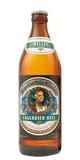

← scroll to see all 9 beers →
The recurring character behind the beers
Drawn from all 9 beers in the catalogue.
Four notes carry across the range. That's a tight house style — most breweries in the catalogue share just one.
A handful of styles across their range — a shared thread has to hold across each of them.
Across 9 beers in 3 style families, one trait still carries through — a broad range makes a shared signature harder to hold.
Augustiner Weißbier
Their beers place in the Top 18% of the catalogue on average, across 8 ranked beers. Consistent rather than spiky — no single standout carrying the rest.
Similar Breweries
hopIQ exclusiveBased on style overlap and flavor profile
About Augustiner-Bräu
Augustiner-Bräu began as the brewery of the Augustinian hermits' monastery near Munich cathedral and is first named in records in 1328. After secularisation in 1803 the brewery continued under state and then private management, and in 1829 Anton and Therese Wagner bought it; it has been a family-run private brewery ever since. Production moved to Landsberger Straße in the 1880s. The brewery malts its own barley in a floor maltings on site and draws water from its own well 230 metres deep. Since 1996 the Edith-Haberland-Wagner foundation holds just over half of the company.
Other breweries from Germany