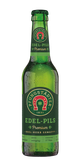
A sharp texture drives the beer — a clean, direct pour with room for the palate to fill in.
Tasting Notes
AI-generated sensory profile for Sternquell Pilsner
◎ Appearance
Bright gold in color with excellent clarity and luminosity. The dense, creamy head displays fine retention and forms distinct lacing on the glass as it subsides. Vigorous carbonation is evident throughout.
◌ Aroma
The nose leads with assertive hop character—herbal and floral notes intermingle with delicate spice. Beneath this lies a clean, bready malt foundation that grounds the composition without overwhelming the aromatic hops.
◐ Taste
Entry shows crisp, cracker-like malt character that transitions into a pronounced but balanced bitterness—classic Pilsner dry. The firm hop bitterness is well-integrated rather than sharp, and lively carbonation maintains tension through the mid-palate.
◑ Finish
Dry and crisp, with the bitterness lingering cleanly without astringency. The finish is relatively short and refreshing, leaving the palate ready for the next sip.
Serve & Enjoy
How to get the most out of Sternquell Pilsner
Serve well-chilled at 4–6°C for maximum crispness. A pilsner served too warm loses its defining snap.
The tall, narrow pilsner glass preserves carbonation and showcases the golden clarity that defines the style.
Drink fresh and cold. Pilsners do not improve with age — within 3 months of packaging is ideal.
Food Pairing
What to eat with Sternquell Pilsner
About German Pilsner
Style guide · what to expect · how to find alternatives
What is a German Pilsner?
Pilsners are crisp golden lagers with 4–5.5% ABV and IBU 25–45. Defined by spicy, floral Saaz hops over a light malt backbone — bright carbonation and a dry bitter finish.
Finding a similar German Pilsner
hopIQ matches by flavor profile — not just style label. A beer with the same hoppy, herbal, bitter character as Sternquell Pilsner will score highly even if brewed in a different country or under a different sub-style name.
Other German Pilsners in hopIQ