Spaten-Franziskaner-Bräu
Spaten traces its history to 1397, when a brewer named Hans Welser is first recorded in Munich; the name goes back to the Spatt family, who ran the house in the 17th century. Gabriel Sedlmayr took over in 1807, and by 1867 it was the largest brewery in the city. Spaten brought out its Märzen in 1841 and on 21 March 1894 shipped the first Münchner Hell. It merged with Franziskaner-Leist in 1922 and with Löwenbräu in 1997, and has belonged to AB InBev since 2003.
Beers by Spaten-Franziskaner-Bräu
7 beers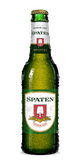
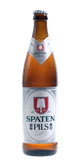
← scroll to see all 7 beers →
The recurring character behind the beers
Drawn from all 7 beers in the catalogue.
Four notes carry across the range. That's a tight house style — most breweries in the catalogue share just one.
Everything sits in one family — which makes the comparison below the interesting part. It isn't what they brew that sets them apart, but how.
Spaten Oktoberfestbier
Their beers place in the Top 22% of the catalogue on average, across 6 ranked beers. Consistent rather than spiky — no single standout carrying the rest.
Similar Breweries
hopIQ exclusiveBased on style overlap and flavor profile
About Spaten-Franziskaner-Bräu
Spaten traces its history to 1397, when a brewer named Hans Welser is first recorded in Munich; the name goes back to the Spatt family, who ran the house in the 17th century. Gabriel Sedlmayr took over in 1807, and by 1867 it was the largest brewery in the city. Spaten brought out its Märzen in 1841 and on 21 March 1894 shipped the first Münchner Hell. It merged with Franziskaner-Leist in 1922 and with Löwenbräu in 1997, and has belonged to AB InBev since 2003.
Other breweries from Germany