Isenbeck Brauerei
Isenbeck traces its origins to 1769, when Albert Isenbeck took over his mother-in-law's brewhouse and tavern in Hamm, Westphalia, and began to expand it. Under his descendants the business grew steadily through the 19th century, became a joint-stock company in 1897 and was rebuilt almost entirely after heavy damage in the Second World War. Brewing in Hamm ended in the late 1980s. Isenbeck has since been a brand of the Warsteiner group, brewed in Paderborn and sold mainly as a regional beer around Hamm.
Beers by Isenbeck Brauerei
2 beers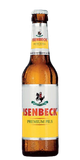
The recurring character behind the beers
Drawn from all 2 beers in the catalogue.
Only what these two beers agree on — a full signature needs at least three.
Two beers isn't enough to tell how they differ from comparable breweries.
Isenbeck Premium Pils
Their beers place in the Top 36% of the catalogue on average, across 2 ranked beers.
Similar Breweries
hopIQ exclusiveBased on style overlap and flavor profile
About Isenbeck Brauerei
Isenbeck traces its origins to 1769, when Albert Isenbeck took over his mother-in-law's brewhouse and tavern in Hamm, Westphalia, and began to expand it. Under his descendants the business grew steadily through the 19th century, became a joint-stock company in 1897 and was rebuilt almost entirely after heavy damage in the Second World War. Brewing in Hamm ended in the late 1980s. Isenbeck has since been a brand of the Warsteiner group, brewed in Paderborn and sold mainly as a regional beer around Hamm.
Other breweries from Germany