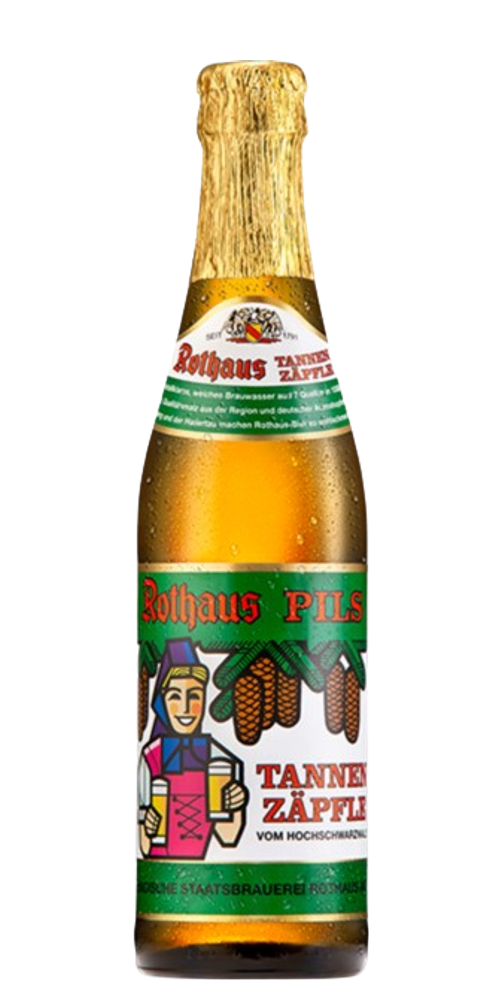
A sharp texture drives the beer — a clean, direct pour with room for the palate to fill in.
FEATURED IN
Tasting Notes
AI-generated sensory profile for Tannenzäpfle
◎ Appearance
Bright golden yellow with excellent clarity and a fine-bubbled white head that clings persistently to the glass. The carbonation is visible and lively, creating a refined visual presentation characteristic of well-crafted German pilsners. Light retention and structure indicate proper conditioning and serving technique.
◌ Aroma
The nose opens with a pronounced meadow-herb character from Tettnang and Hallertau hops, lending a fresh, spicy quality to the profile. Underneath sits a soft, clean pale malt base with subtle notes of fresh bread and cereal grain. The overall impression is delicate yet clearly hop-forward, with an herbaceous and grassy edge that speaks to the noble hop varieties at work.
◐ Taste
The palate enters with a firm hop bitterness that integrates smoothly with a soft malt sweetness, creating a balanced interplay across the mid-palate. Flavors of fresh bread, cracker, and a distinctive spicy-grassy hop bite sustain the drinking experience without heaviness. The bitterness is clean and defined rather than aggressive, allowing the delicate malt character to remain present throughout.
◑ Finish
The finish is notably dry and clean, with the hop bitterness resolving quickly into a crisp, refreshing aftertaste. No lingering sweetness or residual flavors persist; the beer leaves the palate fresh and ready for the next sip.
Serve & Enjoy
How to get the most out of Tannenzäpfle
Serve well-chilled at 4–6°C for maximum crispness. A pilsner served too warm loses its defining snap.
The tall, narrow pilsner glass preserves carbonation and showcases the golden clarity that defines the style.
Drink fresh and cold. Pilsners do not improve with age — within 3 months of packaging is ideal.
Food Pairing
What to eat with Tannenzäpfle
About German Pilsner
Style guide · what to expect · how to find alternatives
What is a German Pilsner?
Pilsners are crisp golden lagers with 4–5.5% ABV and IBU 25–45. Defined by spicy, floral Saaz hops over a light malt backbone — bright carbonation and a dry bitter finish.
Finding a similar German Pilsner
hopIQ matches by flavor profile — not just style label. A beer with the same hoppy, clean, dry character as Tannenzäpfle will score highly even if brewed in a different country or under a different sub-style name.
Other German Pilsners in hopIQ